
Bio-Oil Skincare Body Oil Serum Review, If you have ever stood in front of a mirror studying an old scar, fresh stretch marks, or skin that looks dull and thirsty no matter how much lotion you use, you already understand why Bio-Oil Skincare Body Oil Serum keeps getting so much attention.
The product is still heavily visible in the market in 2026, with Bio-Oil’s official US site calling it dermatologist recommended and clinically proven, while Amazon currently labels the 6.7 oz version as Amazon’s Choice and says 20K+ bought in past month.
Before you spend money on another bottle of hope, the real question is simple: does Bio-Oil actually help scars, stretch marks, and dry skin, or is it mostly good marketing in a pretty orange bottle? That is what this review is here to answer in plain English.
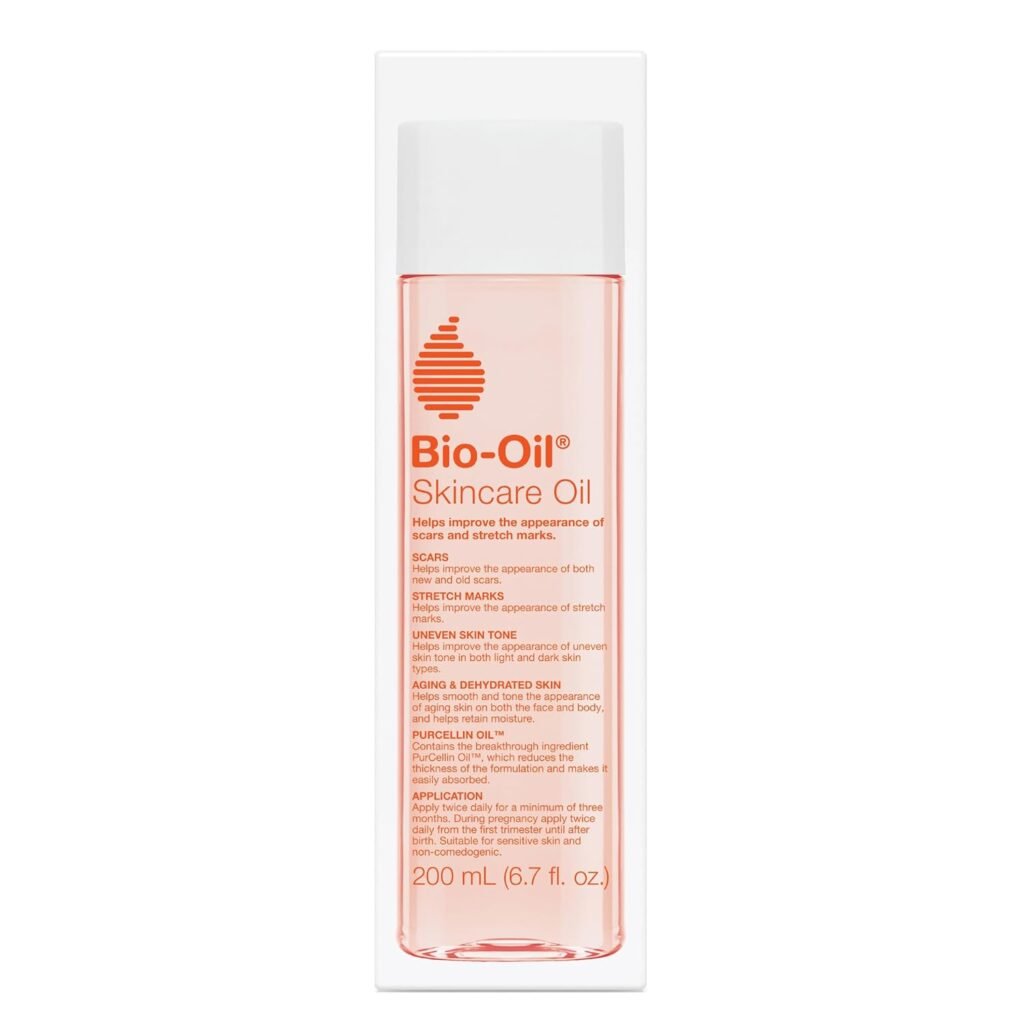
This article looks at the latest official product information, current marketplace signals, and what dermatology sources say about stretch marks and scars so the review stays balanced rather than blindly positive. Bio-Oil may absolutely be useful, but useful and magical are not the same thing, and skincare works best when expectations are grounded in reality.
Table of Contents
What Is Bio-Oil Skincare Body Oil Serum Review About?
Bio-Oil sits in that interesting skincare category where a product becomes bigger than the shelf it came from. It is not just sold as a moisturizer. It is sold as a multi-purpose skin oil for scars, stretch marks, uneven tone, and dry skin, which instantly gives it broad appeal.
On Bio-Oil’s official US product page, the brand says the formula is dermatologist recommended, clinically proven, non-comedogenic, and suitable for face and body use across all skin types, including sensitive, oily, and acne-prone skin.
That is a long list of promises, and it explains why Bio-Oil keeps showing up in conversations around pregnancy skincare, post-acne marks, surgery scars, and flaky winter skin.
The product also clearly has current consumer momentum. Amazon’s listing for the 6.7 oz version labels it Amazon’s Choice and reports 20K+ bought in past month, which signals that this is not some forgotten cult oil from years ago.
People are still actively buying it in large numbers. Bio-Oil’s official site also says the product is sold in 165 countries, describing it as a worldwide skincare staple with hundreds of awards.
That kind of reach does not automatically prove effectiveness, of course, but it does show the product has strong staying power in a brutally competitive beauty market.
A product that disappears after a trend spike usually lacks real user retention; Bio-Oil has done the opposite and stayed visible for years.
Bio-Oil Skincare Body Oil Serum Review for Stretch Marks
At its core, Bio-Oil claims to improve the appearance of skin issues rather than medically treat or erase them. That wording matters more than most buyers realize. The official page says it helps reduce the appearance of scars, stretch marks, and other marks due to surgery, injury, acne, aging, pregnancy, and more.
It also claims to deliver essential hydration and help the skin retain moisture without clogging pores. This positioning makes Bio-Oil less of a single-purpose scar oil and more of a cosmetic support product for skin that looks uneven, dehydrated, or marked.
The strongest part of Bio-Oil’s promise is probably its role in dry skin support. Oils are naturally good at reducing transepidermal water loss because they help seal moisture into the skin barrier. Bio-Oil leans into that by describing the formula as fast-absorbing and moisture-retaining.
For dry skin, that makes immediate sense. Where buyers need to be more cautious is with stretch marks and scars. Official Bio-Oil FAQ material cites internal clinical data, including a 2010 stretch-mark study where 95% of subjects showed statistically significant improvement after 2 weeks and 100% improved after 8 weeks.
That sounds impressive, but it still speaks to improvement in appearance, not disappearance. A scar is like a page that has already been creased. You can smooth it, soften it, and make it less obvious, but you may not restore it to untouched condition.
Bio-Oil Skincare Body Oil Serum Review: Ingredients That Make It Different
One reason Bio-Oil remains popular is that the formula is easy for non-experts to understand. The official product page highlights Vitamin E, chamomile oil, and lavender oil, and it also emphasizes PurCellin Oil, which Bio-Oil says mimics natural lipids in skin to help repair and re-regulate the moisture barrier.
That last part is important because texture often decides whether people keep using a skincare product long enough to see any results. A thick oil that feels like kitchen grease on your body may be effective in theory, but in real life it ends up forgotten in a drawer after four days. Bio-Oil’s lighter, more fluid feel is one of its biggest practical advantages.
The product also carries several modern consumer-friendly labels that matter for buyers comparing it with alternatives. Bio-Oil says the original formula is vegan, cruelty free, paraben free, and 100% recyclable.
The brand FAQ also says all Bio-Oil products are dermatologically tested and suitable for all skin types. Those are not miracle-making features, but they do increase confidence for shoppers who care about ingredient profile and brand standards.
The ingredient story here is less about a flashy breakthrough and more about a blend designed to be soothing, cosmetically elegant, and easy to use regularly. In skincare, that is no small thing. The best formula on paper means very little if the user hates applying it. Bio-Oil seems to understand that and has built its reputation partly on consistency and feel, not just on claims.
What Dermatology Sources Say About Stretch Marks and Scars
This is the section that separates a useful review from a sales page. Dermatology sources generally do not support the idea that rubbing any oil into skin will completely remove stretch marks or scars.
The American Academy of Dermatology says that many widely used remedies do not work as people hope, and notes that in studies, almond oil, cocoa butter, olive oil, and vitamin E did not prevent stretch marks. The AAD also says that in-office procedures have proven more effective than creams, lotions, and gels for stretch marks. Mayo Clinic goes even further, saying the idea that you can treat or prevent stretch marks by rubbing creams, oils, or lotions onto skin is not supported by strong evidence.
That does not automatically make Bio-Oil useless. It just tells you where the ceiling is. Bio-Oil may help skin look softer, more supple, better hydrated, and slightly more even over time. It may support the appearance of newer marks better than older, fully mature ones.
But for deep, old stretch marks or prominent scars, medical sources suggest that procedures like microneedling, laser treatments, or other dermatologist-guided options are often more effective than over-the-counter topicals.
Cleveland Clinic also notes that research on vitamin E or A in topical scar products is inconclusive, which is a good reminder not to confuse a popular ingredient list with guaranteed transformation. The honest takeaway is that Bio-Oil can fit into a skincare routine, but it should not be treated like a magic wand for structural skin changes.
My Honest Review of Bio-Oil Performance
Here is the most balanced verdict: Bio-Oil is better as a skin-conditioning product than as a miracle scar eraser. If your goal is to make dry, rough, tight-feeling skin look healthier and feel more comfortable, Bio-Oil makes a lot of sense.
If your goal is to fade the visual harshness of fresh-looking marks, post-acne discoloration, or newer stretch marks while also improving skin softness, it may be worth trying. If your goal is to completely remove old silver stretch marks or significantly remodel thick surgical scars, this is probably not enough on its own.
That is not a flaw unique to Bio-Oil. That is simply the limit of topical skincare.
What I like about Bio-Oil is that it does not survive only on vague promises. It has current consumer traction, official clinical positioning, and a formula profile that supports regular use.
What I do not like is that many buyers interpret “clinically proven” as “dramatic results for everyone,” and skincare rarely works that way. Think of Bio-Oil like polishing a scratched wooden table. Polishing can make the surface look richer, smoother, and less distracting, but it does not replace the wood.
In the same way, Bio-Oil can improve the look and feel of marked skin, yet the underlying texture changes may remain. For realistic users, that can still be a win. For buyers expecting Photoshop in a bottle, disappointment is almost guaranteed.
Texture, Scent, Absorption, and Daily Experience
A skincare product lives or dies by the experience of applying it, and this is where Bio-Oil earns much of its reputation. The official page describes it as fast absorbing and non-comedogenic, and that combination is a big selling point.
Many body oils feel rich but heavy. Bio-Oil is designed to spread easily and sink in faster than a thick occlusive balm. That matters whether you are applying it after a shower, before bed, or under clothing during the day.
A product that leaves you feeling sticky for an hour often becomes a weekend-only product. Bio-Oil is much more likely to become part of a real routine.
For dry skin, the texture is especially helpful because it creates that immediate comfort effect. Skin often feels smoother and more flexible quickly, even before any long-term change in marks becomes visible. For face use, the official site says it is safe for acne-prone and oily skin because the formula will not clog pores, but that does not mean every face will love it equally.
Some people enjoy facial oils; others find any oil-based product too shiny or too fragranced for daytime wear. Bio-Oil’s appeal is strongest on body areas like hips, thighs, abdomen, arms, elbows, knees, and healing post-acne marks on the body.
On the face, results depend heavily on personal tolerance and routine. The formula may be non-comedogenic on paper, but real-world skin can still be picky, moody, and dramatic like a friend who says she is “fine” when she is clearly not.
How to Use Bio-Oil for Better Results
One of the biggest mistakes people make with products like Bio-Oil is using them inconsistently for a week and then declaring them life-changing or useless.
The brand’s clinical trial summary in its FAQ reports improvements being tracked over 2 weeks and 8 weeks, and product-use guidance commonly points users toward twice-daily application for a sustained period rather than random use.
That means Bio-Oil is not really a “test it once tonight and judge it tomorrow” type of product. It belongs in the slow-and-steady category. Skin remodeling, moisture-barrier support, and visible softening take repetition.
The best practical method is simple: apply it to slightly damp skin after bathing, massage it into the target area for a minute or two, and keep going daily.
That damp-skin step matters because oil is excellent at sealing moisture, not replacing water all by itself. For very dry skin, pairing Bio-Oil with a cream or lotion can work even better, almost like putting a lid on a pot so the steam stays inside.
For scars or stretch marks, gentle massage may also help you stay consistent and keep attention on the area. Cleveland Clinic notes that massaging a moisturizing cream into a scarred area can help healing, though not specifically that special scar oils are necessary.
So the ritual itself may support the result: daily contact, moisturization, and patience. If you are pregnant or using it on sensitive areas, patch testing first is still a smart move.
Who Will Probably Love Bio-Oil
The ideal Bio-Oil buyer is someone who wants a multi-use body oil with better cosmetic elegance than a basic drugstore oil and more flexibility than a heavy scar cream.
It is a particularly good match for people dealing with dry or dehydrated skin, mild uneven tone, fresh-looking stretch marks, post-pregnancy skin care routines, or older scars they simply want to soften visually rather than “remove.” The official site also highlights suitability for all skin types, including sensitive and acne-prone users, and the non-comedogenic claim makes it more versatile than many traditional body oils.
It is also a strong fit for shoppers who value products with broad utility. One bottle can cover elbows, knees, shins, abdomen, hips, shoulders, and selected facial areas if tolerated.
That kind of versatility can justify the purchase more easily than a niche product that only has one job. There is also the trust factor: current Amazon momentum, official clinical positioning, and the brand’s long market presence all combine to make Bio-Oil feel like a safer purchase than a random private-label scar serum with dramatic before-and-after images and no credibility behind it.
In a world full of skincare products that sound like they were named by a marketing robot, Bio-Oil benefits from familiarity and a formula concept that people understand instantly. It is not exotic. It is just easy to keep using, and that often matters more than hype.
Who Should Lower Expectations or Skip It
Bio-Oil is not the best choice for everyone, and saying that actually makes this review more useful. If your primary concern is deep, old stretch marks, especially pale or silver ones that have been around for years, you should know that medical sources do not strongly support the idea that topical oils will make a dramatic difference.
The AAD and Mayo Clinic both point toward the limits of store-bought topical products, while dermatology-directed procedures are often more effective. So if you are shopping for dramatic structural improvement, you may be better served by consulting a dermatologist instead of collecting bottles that promise hope in orange packaging.
You may also want to skip Bio-Oil if you dislike fragranced products, prefer completely minimal ingredient formulas, or are specifically searching for evidence-backed scar treatments such as silicone gels or prescription options.
Cleveland Clinic notes that research on vitamin E or A-based topical scar products is inconclusive, which means there is not enough reason to treat Bio-Oil as the gold standard for serious scar management.
And if your skin breaks out easily with oils, the non-comedogenic claim is reassuring but not a universal guarantee. Some people can wear almost anything; others react like their pores are filing a formal complaint.
The smart move is to match the product to the goal. Buy Bio-Oil for moisturization plus cosmetic improvement. Do not buy it expecting medical-level scar revision.
Bio-Oil at a Glance
| Factor | What Current Sources Suggest |
|---|---|
| Main use | Helps improve the appearance of scars, stretch marks, uneven tone, and dry skin |
| Texture | Fast-absorbing oil, lighter than many heavy body oils |
| Pore concern | Officially non-comedogenic |
| Skin types | Brand says suitable for all skin types, including sensitive and acne-prone skin |
| Evidence reality | May improve appearance, but strong evidence for preventing or erasing stretch marks with topicals is limited |
| Market signal | Amazon’s Choice; 20K+ bought in past month on Amazon listing |
| Brand extras | Vegan, cruelty free, paraben free, recyclable packaging |
Pros and Cons
| Pros | Cons |
|---|---|
| Excellent for dry skin softness and glow | Not likely to erase old scars or deep stretch marks |
| Easy-to-spread, elegant oil texture | Results need consistency and patience |
| Non-comedogenic claim improves versatility | May still feel too oily for some facial routines |
| Can be used on face and body | Medical sources say in-office treatments often work better for stretch marks |
| Strong brand credibility and current popularity | Expectations are often inflated by marketing and social proof |
Final Verdict: Is Bio-Oil Worth Buying?
Yes, Bio-Oil is worth buying if you understand what it is actually good at. It is a strong cosmetic skincare oil for people who want softer, more comfortable skin and gradual improvement in the appearance of marks.
It is especially appealing for dry skin, body moisturization, and newer or milder visual concerns where hydration and regular massage may help skin look better over time.
The formula has current market momentum, credible official positioning, and a daily-use experience that encourages consistency. That combination is why so many people keep repurchasing it.
At the same time, this is not a miracle treatment for severe stretch marks or established scarring. The best way to think about Bio-Oil is as a very good supportive skincare product, not a replacement for dermatologist-guided treatment.
If your expectation is “make my skin look healthier, smoother, and better hydrated while helping marks appear less obvious,” Bio-Oil is a sensible choice.
If your expectation is “remove years of skin changes from pregnancy, acne, or surgery,” you are asking a bottle of oil to do a surgeon’s job. That is not fair to the product, and it is not fair to your wallet either.
Conclusion
Bio-Oil Skincare Body Oil Serum remains popular for a reason. It is easy to use, pleasant on the skin, flexible enough for face and body, and strong at delivering the kind of moisture support that dry skin loves.
The official claims around scars and stretch marks are backed by brand-cited clinical information, and the product clearly still has strong buyer demand in 2026.
That said, independent medical guidance reminds us that over-the-counter oils and creams have limits, especially when it comes to older stretch marks and significant scarring.
So the most honest review is this: Bio-Oil is a very good skin-conditioning oil with realistic cosmetic benefits, not a miracle cure. Used consistently, it can absolutely make skin feel softer, look healthier, and help marks seem less harsh.
For many people, that is enough to make it a worthwhile purchase. And sometimes that is the best kind of skincare product: not one that promises the moon, but one that quietly improves what you see in the mirror day after day.
FAQs
1. Does Bio-Oil permanently remove stretch marks?
No. Current dermatology guidance does not support the idea that topical oils permanently remove stretch marks. Bio-Oil may help improve their appearance, especially alongside consistent moisturization and massage, but in-office treatments are generally more effective for significant results.
2. Is Bio-Oil good for dry skin?
Yes, this is one of its strongest use cases. Bio-Oil’s official product page says it hydrates skin and helps retain essential moisture, which makes it especially useful for dry, rough, or tight-feeling skin.
3. Can I use Bio-Oil on my face?
Bio-Oil says the formula is safe for face and body use and is non-comedogenic, meaning it should not clog pores. Still, facial tolerance varies from person to person, so patch testing is smart, especially if your skin is acne-prone or sensitive.
4. How long should I use Bio-Oil before expecting visible results?
Bio-Oil’s FAQ references clinical outcomes at 2 weeks and 8 weeks, but most users should think in terms of consistent daily use over weeks, not days. Products aimed at cosmetic improvement usually reward patience, not impatience.
5. Is Bio-Oil better than scar creams?
That depends on your goal. For general moisturization and improving the look and feel of skin, Bio-Oil can be a great option. For more serious scar treatment, medical sources suggest that other topical approaches or dermatologist procedures may offer better evidence and stronger results.
You have not enough Humanizer words left. Upgrade your Surfer plan.